Sterfelijke zonden betekenis
Matteüs en Lucas zien "zonden" in de concrete betekenis als een individueel ethisch-moreel wangedrag, [3] zoals ook in het Onzevader. [4] Meestal wordt zonde gebruikt in het meervoud en ze worden als tegenstelling gebruikt ten opzichte van de Christus, die kwam om zijn volk van hun zonden te verlossen (Matteüs ; Lucas ). Aan de hand van de zeven klassieke hoofdzonden uit de katholieke traditie – hoogmoed, jaloezie, boosheid, vraatzucht, wellust, hebzucht en lusteloosheid – zet Tomlin uiteen wat de Bijbel erover zegt. Hij benadrukt dat zonden geen foutjes, maar levensvernietigende gewoontes zijn. Sterfelijke zonden betekenis Veneuze zonden zijn nog steeds overtredingen tegen Gods wet, maar vernietigen het goddelijke leven in de ziel niet, maar verzwakken het, waardoor minder strenge boetedoening nodig is. Hierop voortbordurend spreken de Schriftteksten ook over gepaste en ongepaste zonden. Juiste zonden zijn zonden die willens en wetens worden begaan en die een.



Mortal sins meaning
We call the most serious and grave sins, mortal sins. Mortal sins destroy the grace of God in the heart of the sinner. By their very grave nature, a mortal sin cuts our relationship off from God and turns man away from his creator. A mortal sin (Latin: peccātum mortāle), in Christian theology, is a gravely sinful act which can lead to damnation if a person does not repent of the sin before death. It is alternatively called deadly, grave, and serious; the concept of mortal sin is found in both Catholicism and Lutheranism.Mortal sins meaning A mortal sin is one that “destroys in us the charity without which eternal beatitude is impossible. Unrepented, it brings eternal death,” as the Catechism of the Catholic Church (CCC) puts it ().
Deadly sins explanation
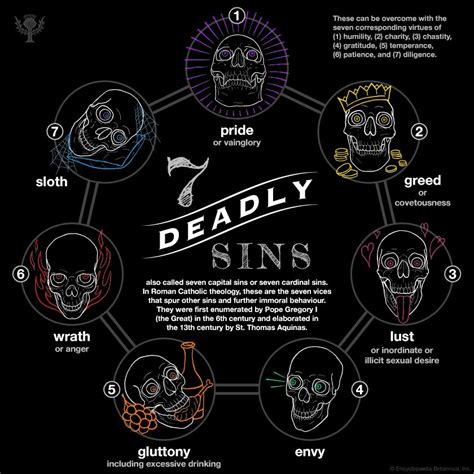
The seven deadly sins (also known as the capital vices or cardinal sins) function as a grouping of major vices within the teachings of Christianity. [1] In the standard list, the seven deadly sins according to the Catholic Church are pride, greed, wrath, envy, lust, gluttony, and sloth. Seven deadly sins, in Roman Catholic theology, the seven vices that spur other sins and further immoral behavior. They were first enumerated by Pope Gregory I in the 6th century and later elaborated by St. Thomas Aquinas. The seven deadly sins can by overcome with seven corresponding virtues.Deadly sins explanation History of the seven deadly sins. The seven deadly sins were first compiled by Pope Gregory I around the year They are pride, greed, lust, wrath, gluttony, envy, and sloth. Gregory also compiled a list of the seven virtues: faith, hope, charity, justice, prudence, temperance, and fortitude.